Trump's War Has Launched A Global Food Crisis--Each Day Without Peace Increases Its Severity
Your guide to key media resources referenced in this post:
1) Webcast: "Mike Adams Joins Daniel Davis to Discuss the Coming Famine, Oil Emergency & Global Economic Collapse"
2) Article: "The Fertilizer Shock of 2026-2027: A Man-Made Famine in the Making" referenced as the "fertilizer shock" article below.
(Note: This is not a political piece. Whether you support or oppose President Trump and the current U.S. policies in Iran, we must look past the politics to understand how this conflict disrupts the global supply chains that supply our families with necessities.)
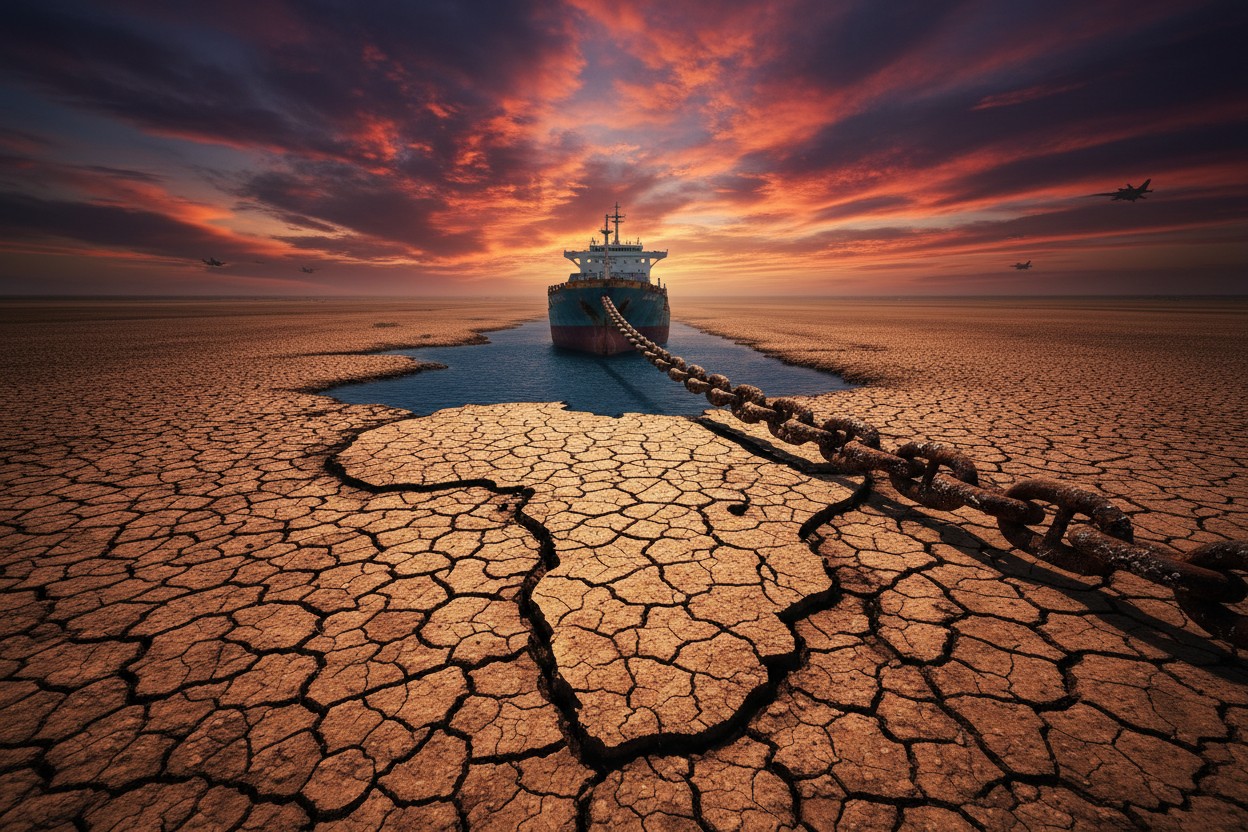
In the above referenced webcast, "Mike Adams Joins Daniel Davis to Discuss the Coming Famine, Oil Emergency & Global Economic Collapse", Daniel Davis pulls up the above referenced "fertilizer shock" article and it provides some of the talking points for the interview. The image used for this post (produced by Mike Adams, I believe) is similar to the image Mike Adams used for his "fertilizer shock" article.
A practical takeaway from the webcast can be condensed into a single sentence:
As the Strait of Hormuz conflict chokes off 1) global fertilizer supplies, 2) fuel for transportation and farming, and 3) packaging materials, do what you can now to protect against price increases and limited food availability.
* * *
Google Gemini summarized the "fertilizer shock" article as follows:
The article argues that the 2026–2027 global fertilizer crisis is a predictable, man-made catastrophe caused by fragile supply chains, financialization, and geopolitical conflicts rather than natural causes. Specifically, a triple shock consisting of the Strait of Hormuz closure, Chinese export bans, and Russian export quotas has doubled urea prices and cut off critical feedstocks like natural gas and sulfur following strikes on Gulf infrastructure.
This supply bottleneck threatens a third of global fertilizer trade during critical planting windows, placing import-dependent and low-income nations like Sudan, Ethiopia, Bangladesh, Pakistan, and Sri Lanka on the brink of severe food shortages by 2027. Beyond mass starvation, the author warns that soaring food prices will trigger widespread political instability and civil unrest in countries where households already spend over half their income on food, such as Nigeria and Egypt.
Gemini's assessment of the accuracy of the "fertilizer shock" article is as follows:
The core geopolitical and logistical triggers described in the piece accurately reflect the market shocks of early 2026:
- The Chokepoint Crisis: Following the outbreak of conflict in late February 2026, shipping through the Strait of Hormuz—which normally handles roughly 25% to 33% of the world’s seaborne nitrogen and urea trade—was severely disrupted by dual blockades. [1, 2]
- Price Spikes and Supply Cuts: Global urea prices did indeed double in the spring, jumping from roughly $400 per metric ton to over $850 per metric ton by April 2026. Furthermore, the secondary supply shocks cited in the text—such as QatarEnergy losing two LNG trains at Ras Laffan in March strikes, Russia halting ammonium nitrate exports between March 21 and April 21, and severe bottlenecks in Gulf sulfur exports—all occurred. [1, 2, 3, 4, 5, 6]
- Regional Vulnerability: The article’s assessment of which nations face the sharpest acute risk aligns with United Nations and Council on Foreign Relations assessments. Import-dependent economies with low household income buffers, particularly conflict-afflicted nations like Sudan and South Asian countries like Bangladesh and Sri Lanka, faced immediate threats to their planting windows. [1, 2, 3]
Fertilizer Shortages Were Already Identified to Be at Crisis levels (and Likely to Cause Food Shortages) in 2022
Interestingly, while preparing this article I found four articles authored by Mike Adams, circa 2022, that forecasted food inflation and scarcity caused by the fertilizer shortages-- chiefly due to the Ukraine vs. Russia conflict:
- Prepare for dire food shortages as most fertilizer production in Europe goes offline
- Soaring fertilizer prices to spark global famines unseen in modern history
- ‘Biggest shock of our lifetime’: Mike Adams says massive food shortages are coming in explosive interview with “Liberty and Finance”
- Fertilizer price hikes prompt soaring food prices and global shortages
Words for the wise.